New University Partnership Announcement
Frankfurt, Germany – 13.02.2026
Migratunity Consulting is proud to announce a new academic partnership with SRH University, one of Germany’s leading private universities, combining strong academic tradition with innovation and applied learning. With its roots dating back to 1969, SRH University is among the oldest private universities in Germany, built on decades of academic excellence and student-centred education.
This collaboration marks an important milestone in Migratunity’s mission to support international students particularly from Africa, India, and other global regions in accessing high-quality education and building strong academic and professional pathways in Germany.
What this partnership means for students
Through our partnership with SRH University, students benefit from a clear, structured, and well-supported pathway from initial counselling to arrival and integration in Germany:
- Step-by-step guidance through the application and admission process, including documentation and eligibility
- Access to a wide range of English- and German-taught Bachelor’s and Master’s programmes
- Personalised counselling, from programme selection to visa and relocation support
- On-the-ground assistance through Migratunity’s Germany-based team
Why SRH University?
SRH University stands out for its blend of long-standing academic tradition and future-oriented education. Key advantages include:
- Practice-oriented programmes in business, engineering, IT, health sciences, media, and design
- Close collaboration with industry partners, supporting internships and career entry
- Modern campuses and innovative teaching methods
- Strong focus on employability and applied learning
- Comprehensive student support services throughout the study journey
By working closely with SRH University, Migratunity Consulting enables students to plan their studies in Germany with confidence, clarity, and trusted guidance at every stage.
If you are considering studying in Germany and are looking for a reliable, student-focused and internationally oriented pathway, we invite you to get in touch with us today.
𝘠𝘰𝘶𝘳 𝘫𝘰𝘶𝘳𝘯𝘦𝘺, 𝘰𝘶𝘳 𝘨𝘶𝘪𝘥𝘢𝘯𝘤𝘦.
Migratunity Consulting Records Successful Participation at the Nation Higher Education
Expo in Nairobi, Kenya
Nairobi, Kenya – 02.02.2026
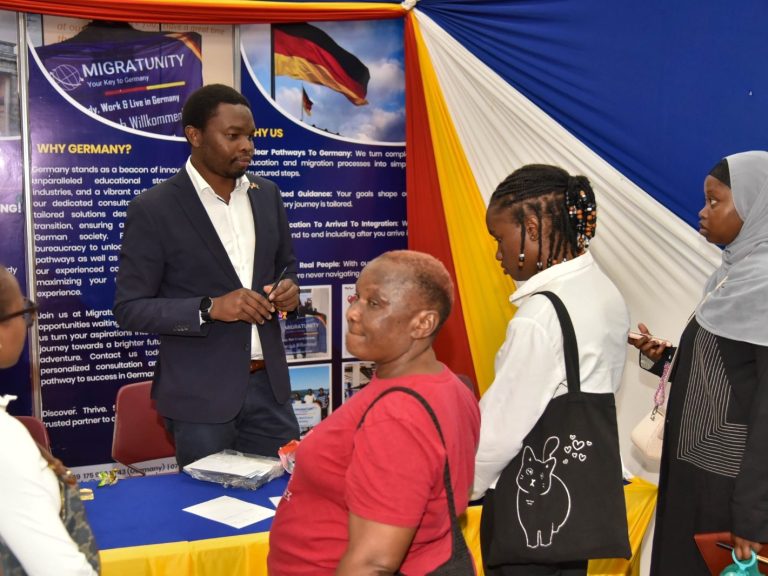
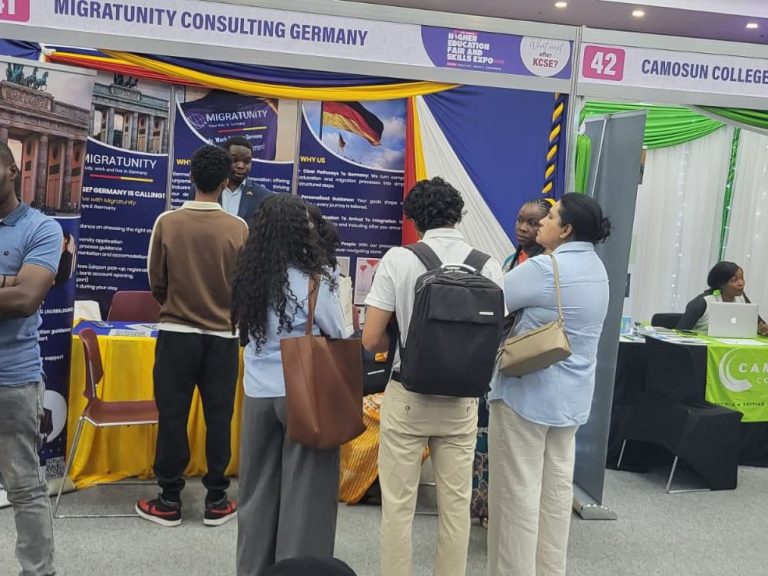
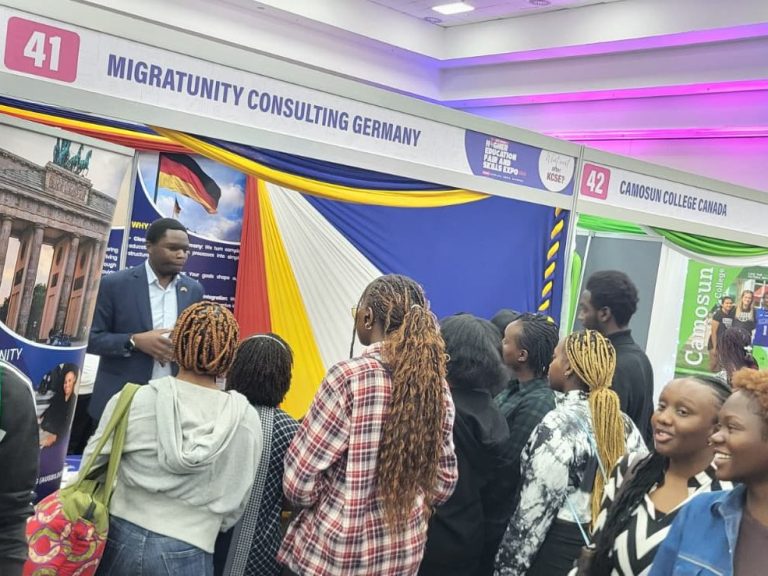
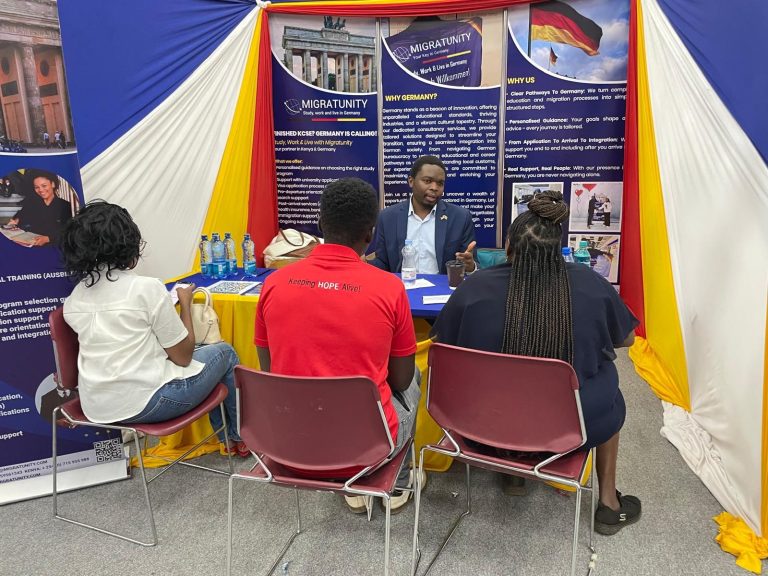
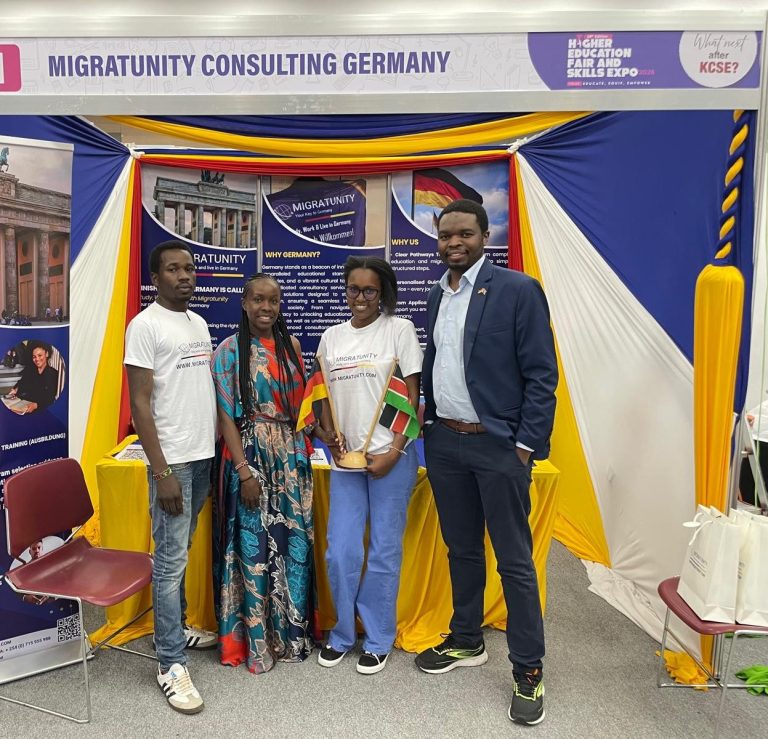
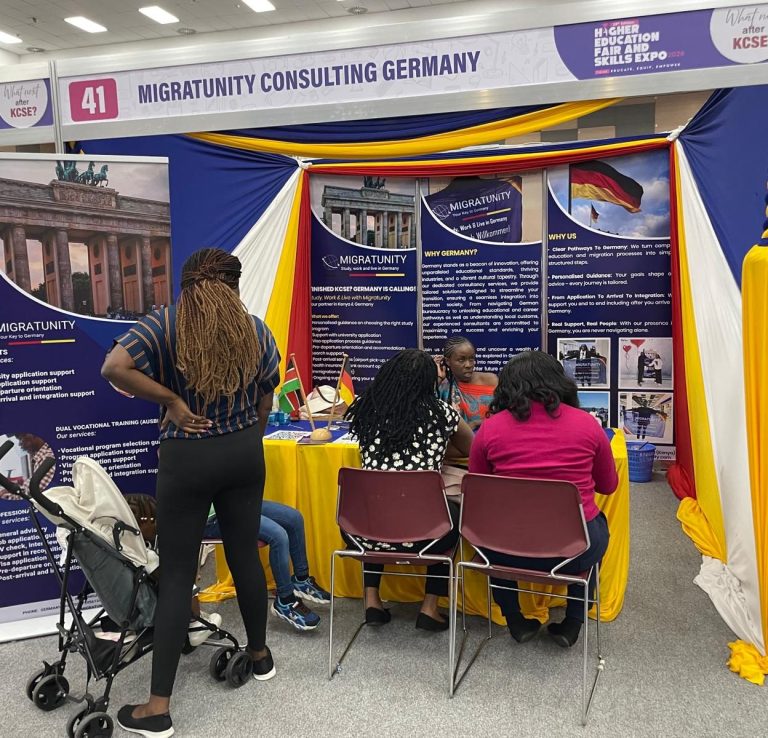
Migratunity Consulting, a Germany-based education and migration consulting firm, successfully participated in the Nation Higher Education Fair held at the Sarit Expo Centre, Nairobi, where it engaged students, parents and professionals seeking opportunities in Germany.
During the exhibition, Migratunity primarily showcased its university student placement services for Germany, providing detailed guidance on bachelor’s and master’s degree pathways, admission requirements, German language preparation and the student visa process. In addition, the team offered general information and guidance on vocational training (Ausbildung), employment opportunities, and what it means to live and work in Germany based on first-hand experience.
Visitors to the Migratunity stand received practical insights into Germany’s education system, labour market needs, residence regulations, and long-term prospects for international students and skilled professionals. The fair provided an important platform for open conversations around realistic expectations, preparation and sustainable migration pathways.
“Our goal is to provide clear, honest, and practical guidance to those considering Germany, not only for university studies, but also for work and life beyond arrival. We believe that informed decision-making is the foundation of successful and responsible migration,” said Cyrus Robiro, Founder of Migratunity Consulting.
As a Germany-based consulting company, Migratunity is distinguished by its ethical and transparent approach. The company offers end to end support that includes language preparation, university admission guidance, visa processes and relocation support, with continued assistance after arrival in Germany.
The strong interest and engagement at the Migratunity stand reflected the growing demand among Kenyan and East African students for trustworthy guidance on higher education and career opportunities in Germany.
Migratunity Consulting expressed its appreciation to Nation Media Group, the organisers of the Higher Education Fair, as well as all visitors and partners who contributed to the success of the event.
New University Partnership Announcement
19.01.2026
We are happy to announce a new academic partnership between Migratunity Consulting and the Constructor University (formerly Jacobs University) Bremen, one of Germany’s leading private, English-taught universities with a strong international reputation.
This collaboration marks an important step in Migratunity’s mission to support international students, particularly from Africa, India and other global regions in accessing high-quality education and building successful academic and professional pathways in Germany.
What this partnership means for students
Through our partnership with Constructor University Bremen, prospective students benefit from a structured, transparent, and well-supported pathway from initial counselling through arrival and integration in Germany. Together, we ensure that students receive:
- Comprehensive support throughout the application and admission process, including guidance on required documents and eligibility
- Access to internationally recognised Bachelor’s and Master’s programmes taught fully in English
- Individualised counselling, from programme selection and application strategy to visa and relocation support
Continuous assistance on the ground through Migratunity’s Germany-based team
𝑾𝒉𝒚 𝑪𝒐𝒏𝒔𝒕𝒓𝒖𝒄𝒕𝒐𝒓 𝑼𝒏𝒊𝒗𝒆𝒓𝒔𝒊𝒕𝒚 𝑩𝒓𝒆𝒎𝒆𝒏?
Constructor University Bremen is internationally known for its academic excellence, research orientation, and global campus environment. Key advantages for international students include:
- English-taught degree programmes across science, engineering, social sciences, and business
- A highly international campus community, with students and faculty from over 100 countries
- Strong research focus and modern facilities supporting academic and innovation-driven learning
- Career-oriented education with close links to industry, research institutions, and global employers
- Comprehensive student support services, including academic advising, career services, and campus life support
By working closely with Constructor University Bremen, Migratunity Consulting enables students to approach their study plans in Germany with confidence, clarity, and trusted guidance at every stage of the journey.
If you are considering studying in Germany and are looking for a reliable, student-focused, and internationally oriented pathway, we invite you to get in touch with us today.
𝘠𝘰𝘶𝘳 𝘫𝘰𝘶𝘳𝘯𝘦𝘺, 𝘰𝘶𝘳 𝘨𝘶𝘪𝘥𝘢𝘯𝘤𝘦.
From Vision to Impact: Our 2025 Journey
30.12.2025
𝐖𝐡𝐚𝐭 𝐚 𝐲𝐞𝐚𝐫!
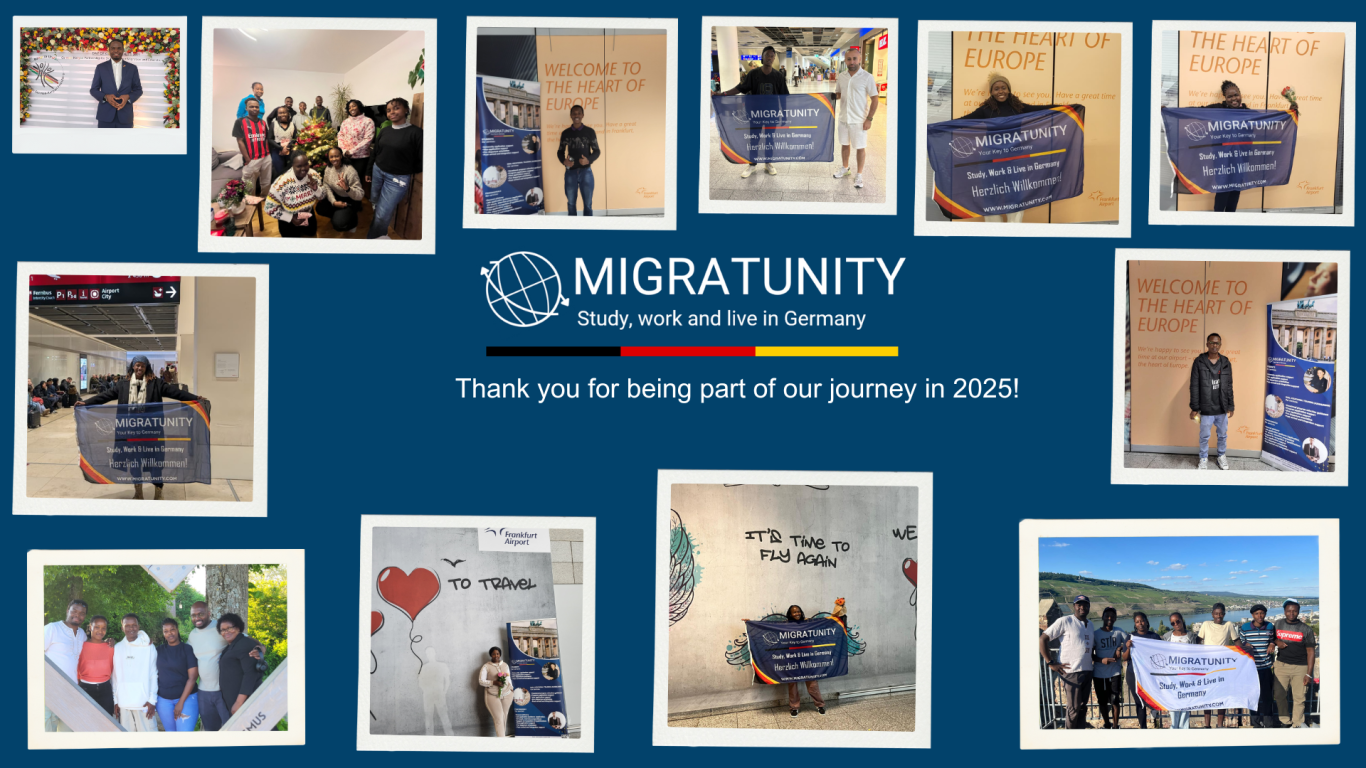
2025 has been marked by growth, learning, and meaningful impact at Migratunity Consulting. We had the honour of supporting students and professionals as they pursued education, training, and career opportunities in Germany.
We also had the opportunity to build meaningful partnerships between German and Kenyan institutions, by laying a foundation for the TELC German examinations in Kenya. This is a step forward in strengthening education and language pathways.
Through every consultation, partnership, and conversation, one thing stood out: trust. We are deeply grateful to everyone who placed it in us.
As we look ahead to 2026, our focus remains unchanged - building bridges, creating opportunities, and supporting even more success stories.
Thank you for being part of the Migratunity journey.
Onwards and upwards!
New University Partnership Announcement
16.12.2025
We are pleased to announce a new academic partnership between Migratunity Consulting and the Accadis University of Applied Sciences located in Bad Homburg, near Frankfurt, Germany.
This collaboration marks an important step in Migratunity’s mission to support international students, particularly from Africa India and other global regions in accessing high-quality education and building successful academic and professional pathways in Germany.
What this partnership means for students
Through our partnership with the Accadis University of Applied Sciences, prospective students benefit from a guided, transparent, and well-supported journey from initial counselling to arrival in Germany. Our joint commitment ensures that students receive:
- Practical support throughout the application process, including guidance on documentation and admission requirements
- Access to high-quality business and management programs taught in an international academic environment
- Individualised guidance, from pre-application counselling to post-arrival support in Germany
- On-the-ground assistance through Migratunity’s Germany-based office
Why Accadis University?
The Accadis University of Applied Sciences is known for its student-centred approach and strong focus on employability. Key advantages include:
- Small, integrated classes, allowing international students to study alongside German students
- Strong industry connections, supporting practical learning and career-oriented education
- An international learning environment with a global outlook
- Excellent student support services, ensuring students are well supported academically and personally.
With Migratunity Consulting and the Accadis University of Applied Sciences working closely together, students can approach their study plans in Germany with confidence, clarity, and trusted guidance at every stage.
If you are considering studying in Germany and are looking for a structured, reliable, and student-focused pathway, we invite you to get in touch with us today.
Your journey, our guidance.
Labor Migration from from East Africa:
Opportunities & Challenges
24.11.2025
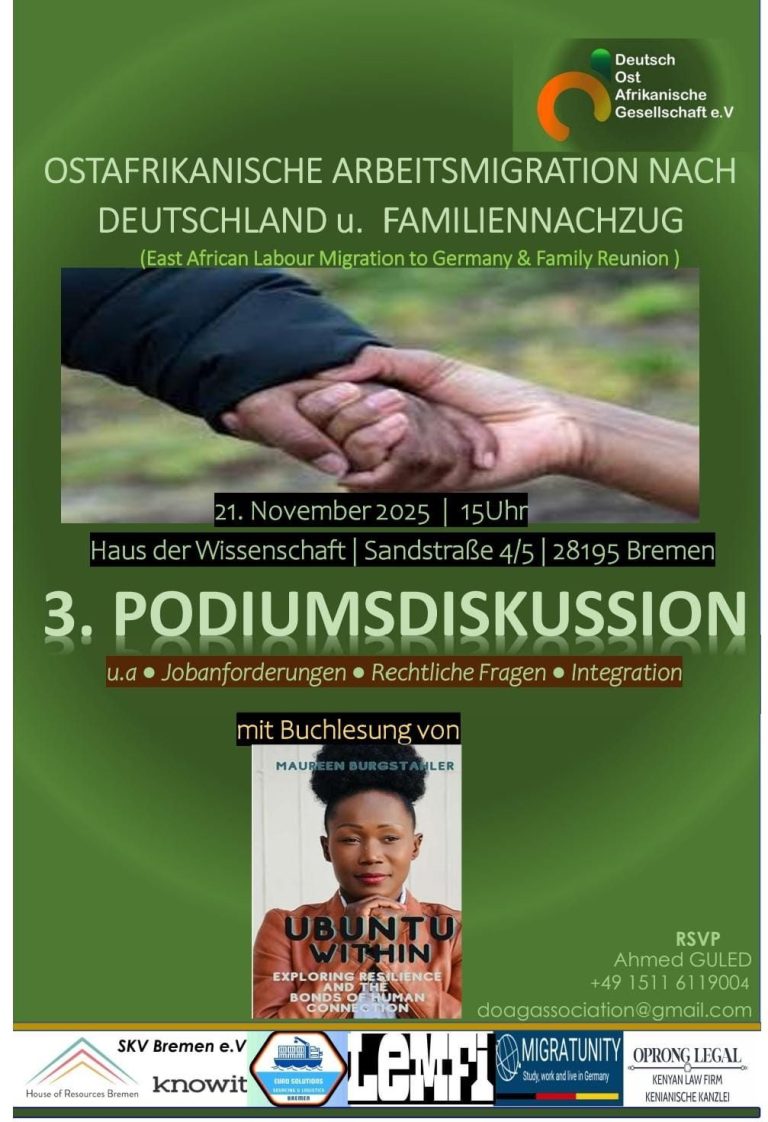
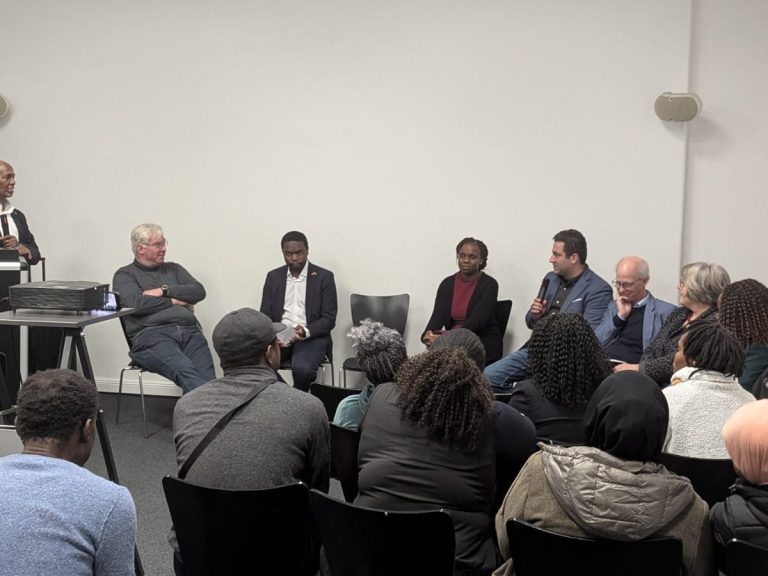
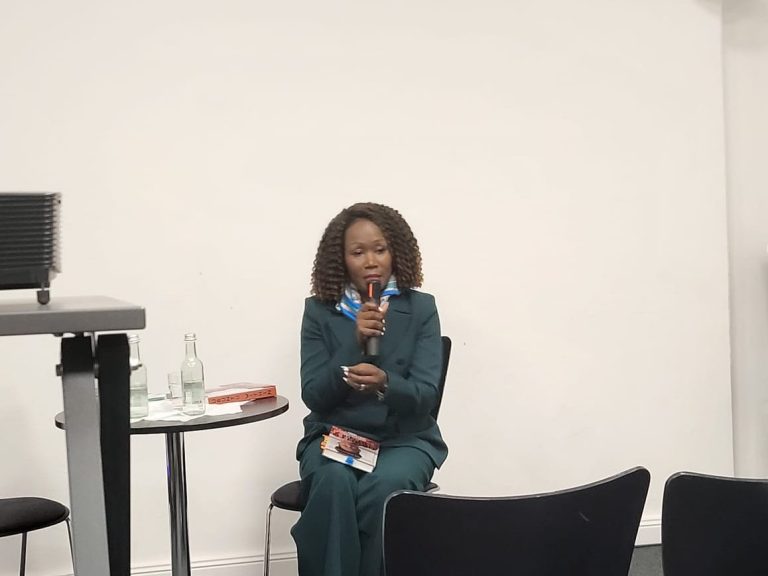
Last Friday, Migratunity Consulting took part in the 3rd panel discussion organised by the Deutsch-Ostafrikanische Gesellschaft e.V. in Bremen. The session opened with a book reading by Maureen Burgstahler from her book “Ubuntu in mir”.
Among the attendees were Ms. Sahhaniim Görgu Philipp, Vice President of the Bremen State Parliament (Bremische Bürgerschaft), and Mr. Basem Khan, Member of the Bremen State Parliament and SPD's spokesperson for labour as well as other relevant stakeholders.
Our founder Cyrus Robiro highlighted a key message: 𝐸𝑑𝑢𝑐𝑎𝑡𝑖𝑜𝑛 𝑚𝑖𝑔𝑟𝑎𝑡𝑖𝑜𝑛 𝑖𝑠 𝑜𝑛𝑒 𝑜𝑓 𝑡ℎ𝑒 𝑚𝑜𝑠𝑡 𝑒𝑓𝑓𝑒𝑐𝑡𝑖𝑣𝑒 𝑎𝑛𝑑 𝑟𝑒𝑎𝑙𝑖𝑠𝑡𝑖𝑐 𝑝𝑎𝑡ℎ𝑤𝑎𝑦𝑠 𝑖𝑛𝑡𝑜 𝑡ℎ𝑒 𝐺𝑒𝑟𝑚𝑎𝑛 𝑙𝑎𝑏𝑜𝑢𝑟 𝑚𝑎𝑟𝑘𝑒𝑡. Many skilled professionals from East Africa and other third countries still face long and complex recognition processes. Clearer and more efficient education routes can help meet Germany’s rising demand for skilled labour.
A warm thank you to the Deutsch-Ostafrikanische Gesellschaft e.V. for the invitation. Migratunity looks forward to continuing this dialogue and contributing to sustainable migration pathways.
Telc German examinations to be offered in Kenya
14.10.2025, Nairobi, Kenya
Migratunity Consulting has announced that TELC German language examinations will soon be available in Kenya, marking a major milestone in expanding access to internationally recognized German language certification across East Africa.
The initiative is being spearheaded by Cyrus Robiro, Founder of Migratunity Consulting, who is facilitating the process in collaboration with TELC in Germany. Once finalized, this development will enable candidates in Kenya to take official TELC exams locally for the first time.
TELC (The European Language Certificates) is among the most recognized proof-of-German-language credentials in Europe. Its exams, aligned with the Common European Framework of Reference for Languages (CEFR), assess proficiency from A1 to C1 levels and are officially accepted by German universities, employers, and immigration authorities.
“This is a significant step forward in making German language certification more accessible to Kenyans seeking education and employment opportunities in Germany,” said Cyrus Robiro. “It aligns perfectly with our mission to bridge the gap between East Africa and Germany through structured guidance, training, and certification pathways.”
Currently, most Kenyan applicants pursuing studies, dual training programs, or professional employment in Germany rely on limited local testing options to obtain language certification. The introduction of TELC exams in Kenya will not only complement the available capacity but also greatly simplify this process, reduce costs, and accelerate visa and admission procedures.
Migratunity Consulting, headquartered in Germany, supports individuals from Kenya and the wider East African region in navigating educational and professional pathways to Germany. Through its expanding network of partners, the agency continues to enhance access to key resources and services that enable successful migration and integration.
Further details on the official testing locations, registration procedures, and exam schedules will be announced in the coming weeks.
For updates, visit www.migratunity.com or follow Migratunity Consulting on social media.
Germany’s opportunity card gains global traction with over 10000 applications in the first year
30.04.2025
In June last year, Germany introduced a point-based immigration system allowing skilled foreigners to travel to Germany without a concrete job offer through the Opportunity Card (Chancenkarte). This new system enables job seekers to stay in Germany for up to one year to search for employment. It replaced the previous six-month job-seeker visa expanding both the timeframe and flexibility for job seekers.
Unlike the former job seeking visa, the Chancenkarte allows holders to work part-time for up to 20 hours per week while they look for a job matching their qualifications. Once a suitable job is secured, they must convert the Opportunity Card into a standard working residence permit.
For university graduates, the job secured must require a degree, even if it is in a different field, as long as the profession is unregulated. However, this flexibility does not apply to regulated professions such as doctors and nurses, who must still obtain a professional license to work in Germany.
One year after its launch, more than 10,000 people from around the world had successfully applied for the Opportunity Card, according to the German Centre for Integration and Migration Research (DeZIM). India led the list with over 4,600 applications, followed by China with nearly 800 and Pakistan with 511. In Sub-Saharan Africa, Ghana had the highest number of applicants (127), followed by Kenya (113) and Nigeria (105).
Challenges: Language and Job Market Realities
Although the Opportunity Card application process is relatively straightforward for those who meet the requirements, many holders face difficulties once in Germany. A major challenge is finding skilled employment without sufficient German language skills. Additionally, securing part-time jobs has proven difficult, as many employers are hesitant to hire individuals with a temporary residency status.
For this reason, it is recommended that Opportunity Card applicants begin their job search before arriving in Germany. This helps them understand the job market better and increases their chances of finding employment. Moreover, even for roles advertised as English-speaking, many employers expect at least basic proficiency in German. For those struggling to find immediate employment, vocational training or university studies in Germany remain viable alternatives to enhance long-term employability and integration.
Disclaimer: This article is provided for general informational purposes only and does not constitute legal advice or legal services within the meaning of § 2(1) of the German Legal Services Act (Rechtsdienstleistungsgesetz – RDG).
Migratunity Consulting is not a law firm and does not provide legal advice. While we strive to provide accurate and up-to-date information, readers should seek independent professional advice regarding their individual circumstances.
Good news for dual citizenship in Germany
09.04.2025
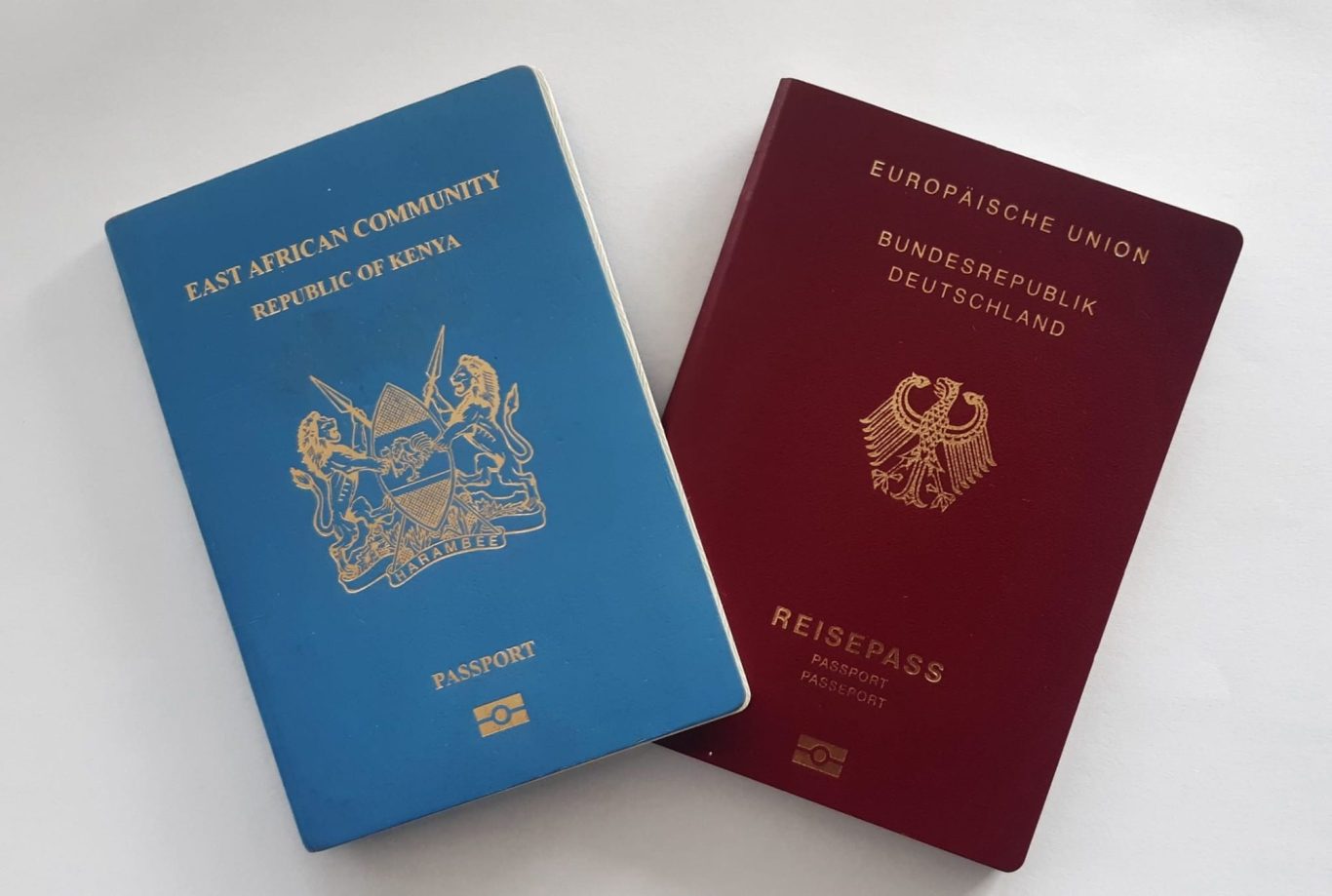
Over the last few weeks and months, many German residents with foreign citizenship have been living on the edge due to the rising political temperatures that saw migration become the key topic dominating the just concluded federal elections. While this largely polarized debate migration mostly focused on asylum seekers and undocumented migrants, it was not lost to a few observers that the recently reformed citizenship law — which made dual citizenship the norm rather than the exception — was also a point of contention. Particularly the conservatives (CDU/CSU) who, as indicated earlier on this page, had been poised to win the elections had indicated that this policy would be reversed once they win elections. Equally earmarked for reversal was the shortened regular naturalization residence period of five or three years for very well integrated foreign residents. Many prospective German citizens thus held their breath after the CDU/CSU parties emerged as the winners beating SPD, Greens and FDP who formed the previous government.
Dual citizenship to remain, but naturalization will require 5, Not 3 years
However, as the CDU/CSU did not win the absolute majority to rule by themselves and have to thus seek a coalition partner. Based on the results of the elections, the only politically viable possibility was the CDU/CSU with SPD as a coalition partner. As such, over the last few weeks, the three parties went into negotiations which have been concluded today. On Migration, there are several aspects that have found their way to the coalition agreement. Mostly importantly, and which is good news for all those seeking to apply for German citizenship, the SPD seems to have had its way to retain the changes on the citizenship law as reformed last year. As such, the dual citizenship and the 5-year residence period required to acquire German citizenship will remain unchanged. However, the possibility for citizenship after 3 years will be done away with.
Following successful negotiations, the coalition agreement now awaits approval from political parties, including the CDU/CSU committee, as well as the members of the SPD, who will have the opportunity to accept or reject the agreement through a Mitgliederentscheid. If approved, the new government is expected to take office in early May and begin implementing the laws outlined in the coalition agreement.
Disclaimer: This article is provided for general informational purposes only and does not constitute legal advice or legal services within the meaning of § 2(1) of the German Legal Services Act (Rechtsdienstleistungsgesetz – RDG).
Migratunity Consulting is not a law firm and does not provide legal advice. While we strive to provide accurate and up-to-date information, readers should seek independent professional advice regarding their individual circumstances.
Can the German dual citizenship law be reversed?
01.02.2025
The recent developments in Germany, particularly the firing of Finance Minister Christian Lindner by Chancellor Olaf Scholz and the potential shift in government after the 2025 elections, have indeed raised questions about the future of the country’s citizenship laws. The uncertainty around the future of dual citizenship is a particularly pressing issue for non-citizen residents, as the political landscape looks set to shift in the direction of the conservative CDU/CSU, who have historically opposed dual citizenship.
Here's a breakdown of the current situation and what it means for residents and potential new citizens in Germany:
1. Current Citizenship Laws (as of 2024)
Under the existing German Citizenship Act (Staatsangehörigkeitsgesetz), significant reforms were passed by the Scholz government, which have expanded access to German citizenship:
- Dual citizenship is now permitted, meaning that people can hold both German citizenship and the citizenship of another country.
- The minimum residency requirement to apply for German citizenship has been reduced from eight years to five years.
- Under special conditions, it’s possible to acquire citizenship after only three years of residency (e.g., for people who are particularly well-integrated into German society).
These reforms were passed due to the strong support from the ruling coalition, which had a majority in the Bundestag at the time. The goal was to make Germany's citizenship laws more inclusive and aligned with the realities of a globalized, multicultural society.
2. Potential Change in Government
The CDU/CSU, historically opposed to dual citizenship, is expected to win the next election in early 2025. Several key figures from these parties, such as Andrea Lindholz, have already signaled their intent to "revisit" the recent reforms, especially the allowance for dual citizenship.
However, while the CDU/CSU is predicted to win, it is likely they will not have an outright majority. This means they would need to form a coalition with one or more other parties to govern. Given that the parties supporting the current citizenship reforms (e.g., SPD, Green Party, FDP) are unlikely to agree to a complete rollback of the changes, the future of the law will likely be subject to negotiation.
Key Possibilities:
- Revised, not Reversed: The CDU/CSU might try to scale back or modify certain aspects of the law, such as limiting dual citizenship or increasing the residency requirements again. However, any significant change would likely be moderated by coalition negotiations, particularly with the parties that supported the reforms in the first place.
- Gradual Phase-Out: Another scenario could involve a phased-in approach to change, where the government might impose stricter conditions on acquiring citizenship over time, but not immediately affect those who have already acquired or regained German citizenship under the new rules.
3. What Does This Mean for Non-Citizen Residents?
- For Those Who Have Already Acquired Citizenship: If you have already obtained German citizenship or regained your original citizenship under the current rules, it is highly unlikely that these changes will affect you. Legal rights are usually not retroactive, and there is typically a grandfather clause that protects people who have already been granted citizenship.
- For Those Who Are Still in the Process: If you are in the process of applying for citizenship, the outcome will depend on the timing of the political changes and whether the CDU/CSU and their potential coalition partners introduce any modifications to the law after they take office. If you're close to meeting the residency requirements (e.g., five years), there is a chance you could benefit from the existing rules before any changes occur.
- For Future Applicants: For people who plan to apply for German citizenship after the 2025 elections, there is a greater degree of uncertainty. Depending on how the next government chooses to amend the laws, it may become more difficult to qualify for citizenship or hold dual citizenship. However, since the CDU/CSU would likely have to compromise with other parties in any coalition, sweeping changes might not be immediate or drastic.
4. Conclusion
The upcoming elections in Germany will likely lead to some changes in the country's citizenship laws, but these changes may not be as severe as some anticipate. While the CDU/CSU has expressed their opposition to dual citizenship, any significant alterations to the law will require coalition negotiations. For those who have already secured citizenship under the new rules, there should be little to worry about. However, for those in the process or planning to apply in the future, it’s wise to stay updated on political developments, as the outcome of the elections and coalition talks will likely influence the final shape of the citizenship laws.
Migratunity Consulting is not a law firm and does not provide legal advice, legal representation, or other regulated legal services. While we strive to provide accurate and up-to-date information, readers should seek independent professional advice regarding their individual circumstances.
Where legal consultation is required, we cooperate with qualified legal professionals and authorized legal service providers.
Studying, working and living in Germany
15.07.2024
Studying, working, and living in Germany as a Kenyan can be a rewarding yet challenging experience. Germany is known for its high-quality education system, strong economy, and diverse cultural environment, making it an attractive destination for international students and professionals. However, like any country, it also comes with its own set of challenges, particularly for immigrants from countries like Kenya.
Cyrus Robiro, our Managing Director, shared some personal insights on this during his interview with KTN’s Persil Telewa on the Globe Traktion show.
Migratunity at the German-Kenyan Job Fair in Nairobi
30.10.2024
In September, the German and Kenyan governments signed the Comprehensive Migration and Mobility Partnership Agreement which mainly aims to create pathways for Kenyans to work and train in Germany.
In the lead-up to the signing, we provided our expertise on studying, working and living in Germany at several events including at a meeting on the sidelines of the 5th edition of the Annual Kenyan Women In Germany e.V. in Germany (KWIG) event in Mainz and a panel discussion in Berlin. The events which were organised by the Kenyan State Department for Diaspora Affairs | Kenya focused on labour migration and how Kenyans can benefit from this agreement. We were honored that Migratunity Consulting was invited to contribute to this vital discussion.
Following the signing of the agreement on 13th September attended by the Kenyan President Dr. William Ruto and German Chancellor Olaf Scholz, Migratunity Consulting had the privilege of participating in a Labour Mobility roundtable consultation hosted by Kenyan President Dr. William Ruto in Berlin. Notable attendees included Prime Cabinet Secretary and Cabinet Secretary for Foreign and Diaspora Affairs Musalia Mudavadi, former Prime Minister and AU Commission Chairperson candidate Rt. Hon. Raila Odinga, EGH, Labour Cabinet Secretary Dr. Alfred Mutua, Principal Secretary for Diaspora Affairs Roseline Kathure Njogu and the Kenyan Ambassador to Germany Amb. Stella - Mokaya Orina.
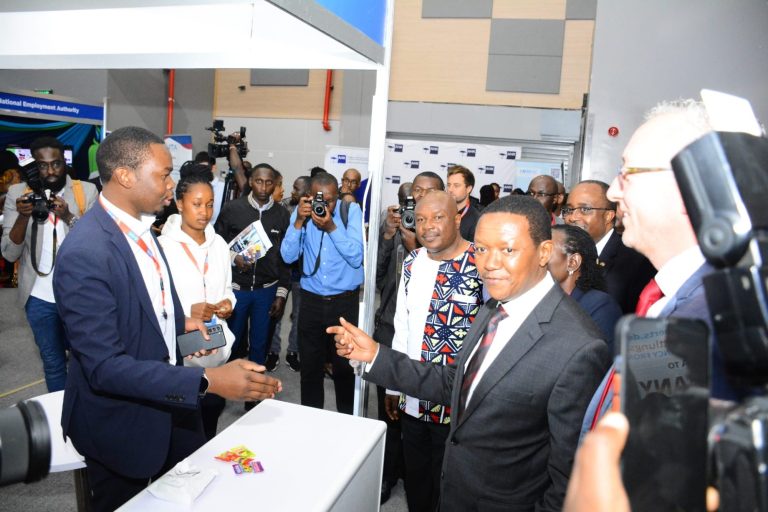
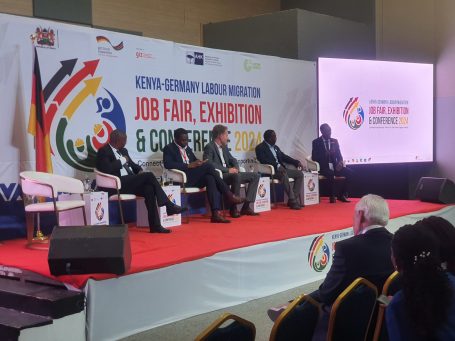
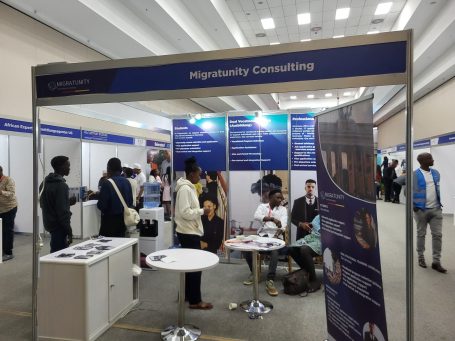
A highlight for us was the successful Kenya-German Job Fair in Nairobi organised by the Delegation of German Industry and Commerce for Eastern Africa (AHK Eastern Africa) Goethe-Institut Nairobi and the GIZ Kenya. We had the opportunity to engage with many ambitious young Kenyans seeking opportunities in Germany and were pleased to host both the Kenyan Cabinet Secretary for Labour and the German Ambassador to Kenya at our stand. Our Managing Director Cyrus Robiro, also participated in a panel discussion at the fair addressing crucial aspects of the agreement, particularly from the perspective of the Kenyan diaspora in Germany.
We look forward to continuing our involvement in the ongoing conversations that will bring this agreement to life and support Kenyans in their pursuit of opportunities in Germany.

Germany introduces the opportunity card (job seeking visa)
15.07.2024
Foreigners who apply for the Opportunity Card, aka Chancekarte, to Germany, can stay in the country for one year looking for a job One can apply for the Opportunity Card at the corresponding Germany Embassy as long they at least have vocational training or a university degree In an interview with TUKO.co.ke, a German immigration expert from Kenya, identified as Cyrus Robiro, said that applicants will also have to prove that they have KSh 1.7 million in the bank.